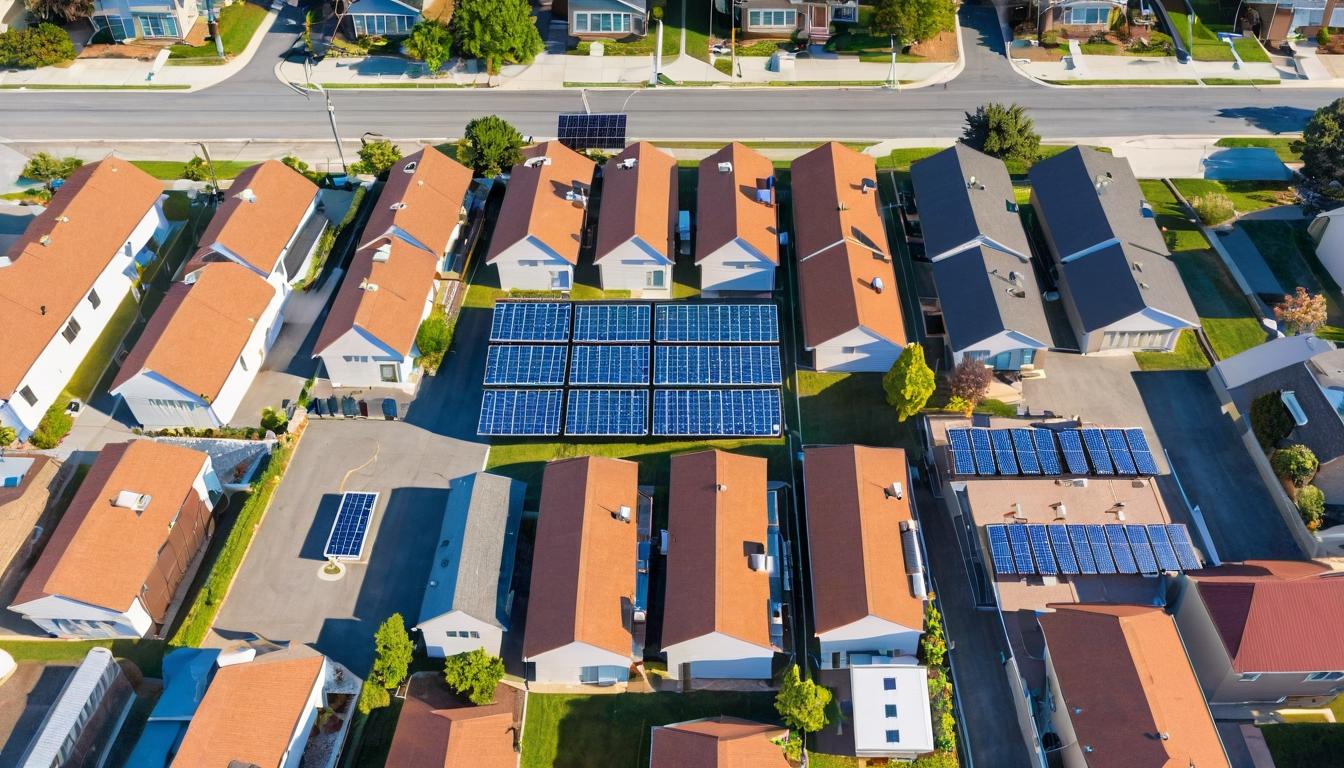
In the hushed corridors of utility boardrooms and the sun-drenched backyards of suburban homes, a quiet revolution is unfolding. It doesn't make headlines like massive offshore wind farms or splashy EV announcements, but this shift is fundamentally altering how electricity flows across America. The story begins not with a bang, but with a whisper—the soft hum of rooftop solar panels and the subtle click of home batteries coming online.
For decades, the grid operated on a simple principle: large power plants generated electricity, transmission lines carried it across states, and local utilities delivered it to homes and businesses. That model is cracking under pressure from millions of small generators—homeowners with solar panels, businesses with backup batteries, communities with microgrids. What was once a one-way river of electrons has become a complex web of bidirectional flows, creating both unprecedented opportunities and headaches regulators never anticipated.
Utility executives speak in measured tones about 'grid modernization' and 'distribution system planning,' but the reality is more dramatic. In California, where distributed energy resources have reached critical mass, utilities are scrambling to manage midday solar surpluses that can overwhelm local circuits. In Texas, the aftermath of Winter Storm Uri accelerated adoption of home solar-plus-storage systems as residents lost faith in centralized reliability. The numbers tell a story of exponential growth: the U.S. added over 5 gigawatts of small-scale solar capacity last year alone—enough to power nearly a million homes during peak sun.
Behind the technical challenges lies a deeper tension about who controls the grid. Traditional utility business models rely on building infrastructure and recovering costs through rates. When customers generate their own power, utilities sell less electricity while still maintaining the grid everyone depends on. This 'utility death spiral' scenario has been debated for years, but we're now seeing the first real-world impacts. Several states have implemented controversial demand charges and grid access fees specifically targeting solar owners, sparking fierce political battles between utilities, solar installers, and consumer advocates.
Yet the most fascinating development isn't the conflict—it's the emerging collaboration. Forward-thinking utilities are experimenting with virtual power plants (VPPs), aggregating thousands of distributed resources to act like traditional power plants when needed. In Vermont, Green Mountain Power pays customers for access to their Powerwall batteries during peak demand. In Arizona, Tucson Electric Power is building a VPP that will coordinate solar, batteries, and smart thermostats across thousands of homes. These programs represent a fundamental reimagining of the utility-customer relationship from transactional to participatory.
The regulatory framework is struggling to keep pace. Most public utility commissions operate under rules written for the 20th-century grid, evaluating utility investments through lenses that don't account for distributed benefits. How do you value a home battery that provides grid stability during heatwaves? What's the right price for solar power exported to neighbors? These questions are being worked out in real time through pilot programs and rate cases that will shape the grid for decades.
Meanwhile, technology continues to accelerate the transformation. Smart inverters can now provide grid services that once required billion-dollar substations. Blockchain-enabled peer-to-peer energy trading platforms are being tested in Brooklyn and Australia. Artificial intelligence algorithms optimize when to charge electric vehicles based on grid conditions and electricity prices. Each innovation makes distributed resources more valuable and integration more complex.
Environmental justice advocates see both promise and peril in this transition. Rooftop solar has historically benefited wealthier homeowners who can afford the upfront costs, potentially leaving low-income communities bearing grid maintenance costs. But community solar programs and innovative financing models are beginning to change that equation. In Colorado, the Solar Gardens Institute helps develop projects that serve apartment dwellers and low-income households. In Maryland, legislation requires utilities to include equity considerations in grid planning.
The human stories behind these technical developments reveal why this revolution matters. In Puerto Rico after Hurricane Maria, microgrids powered by solar and batteries kept lights on when the centralized grid failed for months. In wildfire-prone California, homeowners with solar-plus-storage systems have created resilient islands of power during public safety power shutoffs. These aren't just technical solutions—they're about keeping medicine refrigerated, communication lines open, and families safe during disasters.
As we look toward a grid powered by renewables, the distributed revolution offers a crucial insight: resilience comes from diversity. A system with millions of small generators is harder to disrupt than one dependent on a few large plants. The challenge isn't whether we'll have more distributed energy—that trajectory is locked in. The real question is whether we'll build a grid that harnesses this diversity intelligently and shares its benefits widely. The answers are being written today in utility commission hearings, corporate boardrooms, and yes, in suburban backyards across America.
The grid's hidden revolution: how distributed energy is quietly rewriting utility rules