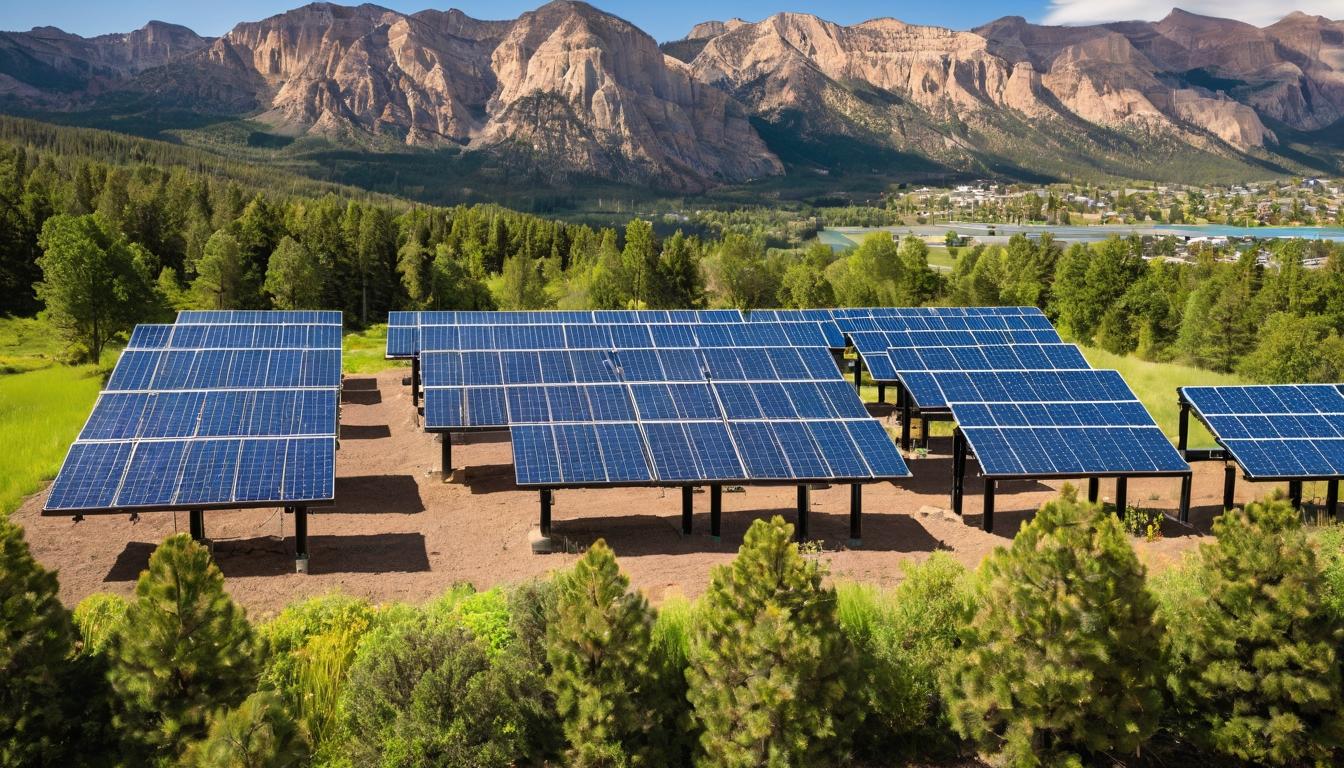
While politicians debate energy policy in Washington, a quiet revolution is unfolding across America's electrical grid. It's not happening in massive power plants or through sweeping legislation, but in suburban neighborhoods, industrial parks, and university campuses where microgrids are gaining unexpected momentum. These self-contained energy systems—capable of operating independently from the main grid—are no longer just emergency backup solutions for hospitals and military bases. They're becoming economic engines for communities that have grown tired of waiting for the centralized grid to catch up with the 21st century.
What's driving this shift isn't just technology, but economics. The cost of solar panels has dropped 90% in the last decade, while battery storage prices have followed a similar trajectory. Suddenly, creating your own miniature grid isn't just technically feasible—it's financially smart. In places like California, where wildfire-related blackouts have become seasonal events, businesses are installing microgrids not as luxury items but as essential infrastructure. The calculus is simple: losing power for days costs more than building your own resilient energy system.
But here's where the story gets interesting. These distributed energy resources are creating data—massive amounts of it—about how energy actually flows through communities. Utilities that once viewed microgrids as threats are now realizing they're treasure troves of information. By monitoring how these systems balance solar generation with battery storage and demand response, grid operators are learning lessons that could transform how we manage energy nationwide.
Enter the artificial intelligence revolution that nobody's talking about. While ChatGPT grabs headlines, more sophisticated AI systems are quietly optimizing microgrids in real-time. These algorithms don't just respond to conditions—they predict them. By analyzing weather patterns, historical usage data, and even social media sentiment about energy issues, AI can anticipate when a community will need more power and adjust accordingly. The result is microgrids that are becoming increasingly autonomous, making decisions about energy trading, storage deployment, and load management without human intervention.
This technological evolution is creating strange bedfellows. Traditional utilities, once the guardians of centralized power, are now partnering with tech startups to deploy AI-powered microgrid management systems. In Massachusetts, National Grid is working with a Silicon Valley firm to create what they call "grid-edge intelligence"—using data from distributed resources to make the entire system more efficient. It's a recognition that the future grid won't be controlled from a single command center, but orchestrated across thousands of interconnected nodes.
The regulatory landscape, however, remains stuck in the analog age. Most states still have rules designed for a one-way flow of electricity—from big power plants to passive consumers. Microgrids with AI capabilities challenge this model at every level. Who owns the data generated by these systems? How should microgrids be compensated for providing grid services? What happens when an AI system makes a decision that affects the broader grid? These questions are being debated in state capitals from New York to Hawaii, with outcomes that will shape America's energy future.
Perhaps the most surprising development is how this technology is reaching communities that have traditionally been left out of energy innovation. In Puerto Rico, still recovering from Hurricane Maria's devastating grid collapse, community microgrids powered by solar and batteries are providing reliable electricity where the central grid remains fragile. In rural Alaska, isolated villages are using AI-optimized microgrids to reduce dependence on expensive diesel shipments. These aren't pilot projects anymore—they're becoming standard practice in places where the traditional grid has failed.
What emerges from this investigation is a picture of an energy transition happening from the ground up. While national debates focus on massive infrastructure bills and climate targets, the real transformation is occurring at the community level, driven by technologies that make local energy independence both possible and profitable. The centralized grid isn't disappearing—it's becoming a backup system for thousands of smarter, more resilient microgrids.
The implications extend far beyond energy. As microgrids proliferate, they're creating new economic models where communities can trade energy like a commodity, where data about energy use becomes valuable intellectual property, and where resilience becomes something you build rather than something you hope for. This isn't just about keeping the lights on during storms—it's about rewriting the social contract between Americans and their energy systems.
One utility executive, speaking on condition of anonymity, put it bluntly: "We used to think about managing megawatts. Now we're thinking about managing relationships between thousands of energy assets. It's a completely different business." That shift—from centralized control to distributed coordination—may be the most important energy story nobody's telling. As AI makes microgrids smarter and economics makes them inevitable, America's energy landscape is being quietly remade, one neighborhood at a time.
The grid's hidden revolution: How AI and microgrids are quietly rewriting America's energy rules